A concrete surface can do much more than provide a durable walking or driving area. Its finish influences how a space looks, feels, performs, and ages over time. For projects that require a refined appearance without losing the practical qualities of concrete, honed polished concrete can provide a clean and distinctive surface option. The right finish can also help a driveway, patio, walkway, courtyard, or commercial area fit naturally with its surrounding architecture.
Why the Finish Deserves More Attention
Concrete is often selected for its strength, versatility, and ability to handle regular use. Yet two concrete surfaces can look remarkably different depending on how they are finished.
The finishing process affects elements such as:
- Surface texture and smoothness
- Level of visual sheen
- Exposure of decorative aggregate
- Light reflection
- Slip characteristics
- Ease of routine maintenance
- Overall appearance as the surface ages
A carefully selected finish can make a basic concrete installation feel more considered. It can also help establish continuity between outdoor paving, building entrances, landscaping, and other hardscape features.
The Difference Between a Basic and Refined Surface
A standard concrete slab can serve its purpose effectively, but its visual character may be limited by a plain or uniform appearance. More refined finishing techniques allow the surface to reveal additional texture and depth.
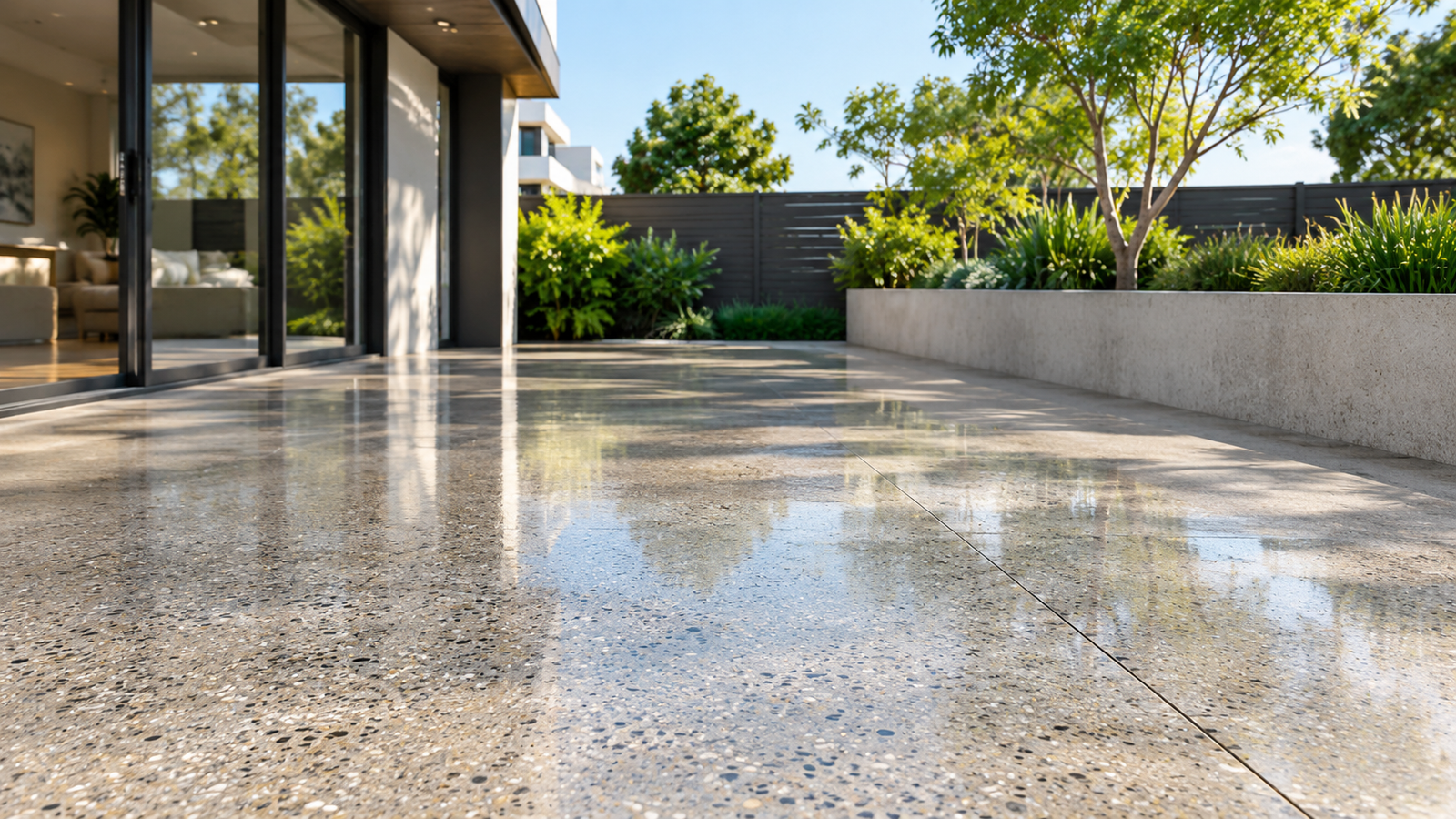
Grinding and polishing processes can expose portions of the aggregate beneath the cement paste. Depending on the level of exposure and finishing method, the finished surface may contain subtle variations in colour, texture, and pattern.
This gives designers and property owners more control over the final appearance without relying entirely on additional surface coverings.
The result can suit a range of settings, including:
- Residential patios and entertainment areas
- Pool surrounds and outdoor living spaces
- Driveways and entry paths
- Retail and hospitality environments
- Office courtyards
- Garden pathways
- Commercial entrances
- Indoor areas that connect visually with outdoor paving
Aggregate Exposure Creates Visual Depth
One of the defining characteristics of a polished concrete finish is the way aggregate can become part of the visible surface.
Small stones and other aggregates are mixed into concrete during production. Once the surface is mechanically ground, selected portions of these materials can become visible. Their size, colour, density, and distribution can influence the appearance of the finished pavement.
This creates natural variation rather than a completely flat visual field.
Aggregate exposure can be particularly useful on larger surfaces because it breaks up visual repetition. Instead of relying on painted patterns or decorative coatings, the material itself provides much of the character.
Light Changes the Appearance Throughout the Day
Surface finish also affects how a paved area interacts with natural and artificial light.
A smoother, refined surface can reflect light differently from rough concrete. Outdoor areas may appear lighter during bright daylight and develop a softer appearance as shadows move across the surface.
This can be useful around:
- Building entrances
- Courtyards
- Outdoor dining areas
- Pool decks
- Covered walkways
- Landscaped garden spaces
Lighting should be considered alongside colour and aggregate selection. A finish that looks subtle under direct sunlight may have a different visual quality beneath evening lighting.
Practical Performance Still Matters
Appearance should not be considered separately from everyday use. Concrete surfaces are exposed to foot traffic, vehicles, weather, dirt, moisture, and changing temperatures.
The finishing method should therefore be selected according to the conditions surrounding the installation.
Important considerations include:
- Expected traffic levels
- Exposure to rain and moisture
- Drainage requirements
- Surface slope
- Intended cleaning methods
- Location of nearby landscaping
- Exposure to vehicle fluids or other contaminants
- Required maintenance frequency
A decorative surface still needs appropriate preparation and installation. Problems beneath the finished layer can affect the long-term performance of the entire pavement.
Maintenance Starts With Good Surface Planning
A well-finished concrete area can be relatively straightforward to maintain, but maintenance requirements depend on the location and finish.
Outdoor surfaces should be kept clear of leaves, soil, standing water, and other debris where possible. Regular cleaning can prevent contaminants from becoming embedded or leaving persistent marks.
For busy commercial spaces, a practical maintenance routine may include:
- Routine sweeping
- Periodic pressure or low-pressure cleaning where appropriate
- Prompt removal of spills
- Inspection for cracks or surface changes
- Checking drainage points
- Addressing stains before they become difficult to remove
The correct cleaning method depends on the surface finish and any protective treatment applied after installation.
Choosing a Finish That Fits the Property
The best-looking finish on a sample may not necessarily be the right choice for every project. Surrounding materials should be considered before making a decision.
Brick, stone, timber, metal, glass, landscaping, exterior walls, and roofing materials can all influence how concrete appears.
For example, a highly reflective finish may create a different visual effect beside large glass surfaces than it would beside natural stone walls. A more textured appearance may work differently in a garden setting than in a minimalist commercial courtyard.
Panorama Concrete Paving can help property owners consider the relationship between the concrete finish and the wider setting, allowing the paving to support the character of the property rather than appearing disconnected from it.
Colour and Texture Should Work Together
Concrete does not have to look completely uniform. Subtle variations in aggregate and surface texture can create depth while maintaining a restrained appearance.
Colour selection should take surrounding surfaces into account. Neutral concrete tones can complement many architectural styles, while exposed aggregate can introduce additional variation without relying on strong decorative colours.
Texture also matters underfoot. A surface designed for an outdoor area may require different considerations from one intended for an interior space or a lightly trafficked courtyard.
The intended use should guide the final combination of appearance and surface characteristics.
Good Preparation Supports the Finished Result
The visible finish receives most of the attention, but preparation has a major influence on how the completed surface performs.
Site conditions, subgrade preparation, drainage, concrete placement, curing, joint placement, and finishing all form part of the overall process. A visually attractive finish cannot compensate for poor preparation underneath.
For larger paving projects, planning should account for access, surrounding structures, drainage paths, expected loads, and future maintenance before work begins.
This early planning can reduce avoidable complications and make the finished area easier to manage over its service life.
A Surface Can Shape the Whole Outdoor Setting
Concrete often covers more area than individual decorative features, which means its appearance can strongly influence the character of a property. A carefully selected finish can connect separate parts of a site and create visual continuity between architecture and landscaping.
The most effective approach starts with the purpose of the space, then considers traffic, drainage, maintenance, surrounding materials, light, colour, and texture. These factors help determine which finishing method makes practical and visual sense.
For property owners planning a new paved area or updating an existing one, discussing the site conditions and desired appearance with an experienced paving professional can clarify the available options. Contact us today to discuss your concrete paving requirements and explore a finish suited to your property’s design and everyday use.